“An executive assistant (EA) is a high‑level administrative professional who, like an office manager, partners directly with C‑suite leaders or any executive member to perform strategic duties” making the executive assistant position one of strategic importance board members, or senior executives to manage time, information, and workflows, leveraging exceptional interpersonal skills. Unlike traditional administrative assistants, the executive assistant operates with greater autonomy, strategic insight, and a mandate to solve complex problems for the business leader. The executive assistant job description often EAs boost organizational efficiency by managing executive assistant duties that free executives to focus on strategy and decision‑making includes a blend of administrative coordination, strategic partnership, and proactive communication management. In today’s remote-first world, many professionals are choosing to pursue a virtual executive assistant job that supports work life balance while delivering high-level results that allows them to support leaders from anywhere, providing the same high-level support from anywhere in the world.
Table of Contents
Why Executive Assistants Matter
An executive assistant boosts organizational efficiency by handling multiple task duties responsibilities and freeing executives to focus on strategy and decision‑making. “From orchestrating global travel to managing confidential data, an administrative assistant or executive assistant’s proactive support creates various responsibilities create more efficient office environment and can multiply top‑level productivity by up to 40%.”

10 Core Executive Assistant Responsibilities
1. Calendar & Email Management
What: “Use your organizational skills to strategically organize and prioritize your executive’s appointments within the organization-essential responsibilities for maintaining productivity reminders, and inbox through effective calendar management.”
How: Leverage executive‑level smart scheduling tools (e.g., Calendly, Microsoft Bookings) and implement a priority‑tag system.
2. Meeting & Event Coordination
What: “As an executive assistant,“…planning, setting up, and following up on meetings-both in‑person and virtual-across the organization with key executives and directors are considered foundational executive assistant duties…” that demand comprehensive knowledge of stakeholders and objectives.”
How: As an executive assistant, prepare agendas, manage RSVPs, send pre‑reads, take minutes, and track action items in a shared task board.
3. Travel & Logistics Planning
What: “Arrange business travel, accommodation, and ground transport-becoming the person who ensures seamless executive mobility for the organization.” using administrative tasks excellent organizational skills travel arrangement expertise is essential, especially in a fast paced environment where timing is critical.
How: The executive assistant should use corporate booking platforms with policy‑driven approvals to streamline travel arrangement processes.
4. Document & Presentation Preparation
What: “Draft, edit, and format executive reports, proposals, and slide decks that inform both leadership and employees about strategic initiatives.”-based on key meeting notes and decisions. Duties that are often shared with an administrative or executive assistant.
How: The executive assistant should “Compile expense reports, and other documents reconcile credit‑card statements, and monitor departmental budgets, including office supply spending and inventory ”on SharePoint or Google Drive.
6. Information & Data Research
What: “Gather industry insights, competitor data, and background materials, and categorize them using a structured filing system to support informed decisions toward a business goal.
How: An executive assistant can subscribe to paid research tools (e.g., Gartner, Statista) and distill key takeaways into executive summaries.
5. Expense & Budget Tracking
What: Compile expense reports, reconcile credit‑card statements, and monitor departmental budgets by keeping track of all financial documentation using detail‑oriented executive assistant skills.
How: “Implement executive expense software (e.g., Concur, Expensify) with automated receipt capture, phone calls for follow-ups, and reminder workflows.”
7. Gatekeeping & Communication Triage
What: “ Filter phone calls, emails, and meeting requests using your ability to responsible, prioritize and protect your top-level executive’s focus.”
How: The executive assistant should develop a clear SLA (service‑level agreement) for urgent vs. non‑urgent requests, and maintain a concierge‑style intake form.
8. Tech & Tools Proficiency
What: Master the software stack-calendar apps, communication platforms, project‑management tools.
How: An executive assistant can earn certifications (e.g., Microsoft Office Specialist, Asana Certified Pro) to streamline workflows and train other staff to the tasks.
10. Problem‑Solving & Proactive Support
What: “The executive assistant should anticipate needs, troubleshoot roadblocks, and propose creative solutions that improve the overall work environment.”
How: The executive assistant should hold a weekly “pre‑mortem” session to identify potential issues and establish contingency plans.
9. Project & Task Management
What: An ideal candidate can lead small projects or initiatives to do the task on behalf of executives or the executive team that require exceptional time management skills to meet deadlines.
How: “An executive assistant can use Kanban boards (e.g., Trello, Jira) to map deliverables, demonstrating the ability to set milestones and report progress in weekly dashboards.”
Executive Assistant Salary & Job Outlook (2025–2035)
According to the U.S. Bureau of Labor Statistics, executive assistant employment is projected to grow 1% between 2023 and 2033, reflecting steady demand despite automation trends. The median annual wage for EAs in 2024 was $65,000, with top earners exceeding $90,000 in major metros.
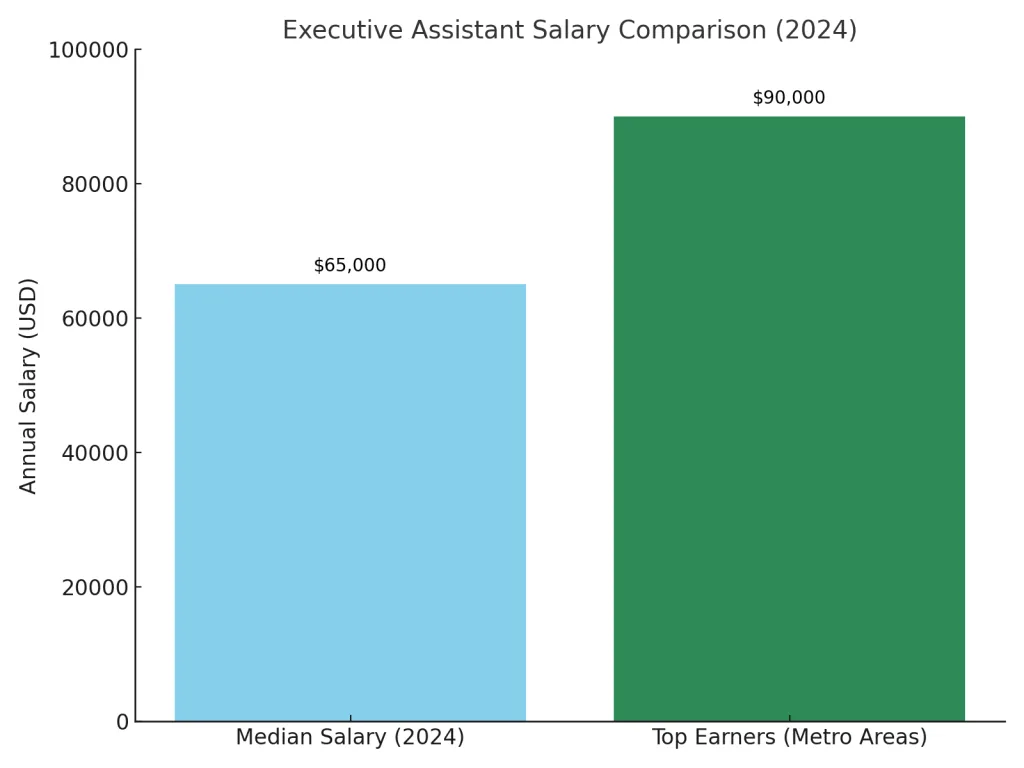
Source: Bureau of Labor Statistics
EA vs. Administrative Assistant: Key Differences
Scope of Work
EAs handle strategic tasks and high‑stakes communication, while admin or personal assistant roles often focus on general support needs.
Autonomy & Decision‑Making
EAs make calendar adjustments and approve minor budget items; these are part of the elevated job requirements that distinguish them from traditional admins.
Skill Requirements
EAs require advanced project management, research, and problem solving skills to handle the task complexity of the role in addition to core admin functions.
5 Pro Tips to Become a Stand‑Out Executive Assistant

- Own Your Calendar: Block focus time for your executive-and yourself.
- Communicate Up: Provide daily “dashboard” emails summarizing priorities and upcoming commitments.
- Build Networks: Cultivate relationships with key stakeholders to accelerate meeting prep and approvals.
- Continuous Learning: An executive assistant should take quarterly courses in public speaking, data visualization, or emerging tools.
- Confidentiality First: Always err on the side of discretion-build trust by safeguarding sensitive information.
Conclusion & Next Steps
“By mastering these ten core responsibilities-and layering in strategic skills like research, project management, and meeting facilitation…”, and tech certifications-you’ll not only excel as an executive assistant but also position yourself for leadership roles (e.g., Chief of Staff).Ready to take the next step? Download our toolkit, update your resume, and start charting an executive assistant career that truly makes an impact.
Frequently Ask Question
How do I become an executive assistant?
Earn an associate’s or bachelor’s degree in business or a related field, then gain 2–3 years of admin support experience. Certifications like CAP (Certified Administrative Professional) prepare candidates for advanced administrative duties and strengthen your executive assistant candidacy.
What qualifications are needed?
An executive assistant needs strong written/verbal communication, advanced Excel or database skills, time‑management prowess, and professional discretion.
Can EAs work remotely?
Yes. Hybrid and fully remote executive assistant roles are increasingly common, especially when equipped with secure collaboration tools (e.g., VPN, Slack). This flexibility has fueled the rise of the Virtual Executive Assistant as a modern career path.